
16.11.2026 · matcha guide
collagen powders vs. collagen drinks: what's actually in your cup?
by jasmijn berting

Short answer: "collagen" on a label says very little. What matters is which collagen, how much of it, and what else is in your cup. Here's how to read the label, and why not every collagen does what you hope it does.
Not every collagen is good collagen
Collagen is a catch all name. Gelatin, generic hydrolysed collagen and bioactive collagen peptides are all called collagen, but they're not the same thing. Your body breaks collagen down before anything reaches your skin. So the question isn't whether a product contains collagen. It's whether that specific collagen has been studied for skin, at the amount that's in your cup.
That's where a lot of products fall short:
- generic collagen: a source of protein, but without studies on that specific ingredient there's no way to know it does anything for your skin
- too little: some products contain a fraction of the amount used in studies, just enough to put "collagen" on the front
- collagen boosters: some contain no collagen at all, only vitamins and plant extracts
- the source alone: marine or bovine is a choice, not a quality mark. What counts is the peptide and the research behind it
Want to know what collagen does in your skin in the first place? Read what does collagen do for your skin.
Five things to check on the label
- the type of collagen: look for a named, studied ingredient like verisol®, not just "collagen" or "hydrolysed collagen"
- the amount per serving: compare it to the amount used in the studies on that ingredient
- sugar and sweeteners: ready to drink collagen often contains added sugar, sweeteners or fruit concentrate
- flavourings: collagen can have a taste of its own, and many products cover it with aromas. A good peptide is tasteless, so it doesn't need covering
- testing: is every batch tested independently?
Powders vs. drinks, side by side
| collagen powders | collagen drinks | asa matcha + collagen | |
|---|---|---|---|
| type of collagen | varies, often generic | varies, often generic | verisol® collagen peptides |
| added sugar or sweeteners | sometimes | often | none |
| taste | often flavoured to cover the taste | sweet and flavoured | tasteless collagen, you taste matcha |
| how you take it | an extra shake or scoop | an extra bottle or shot | in the matcha you already drink |
| packaging | tub or sachets | single use bottles | tin and refill |
Why tasteless matters
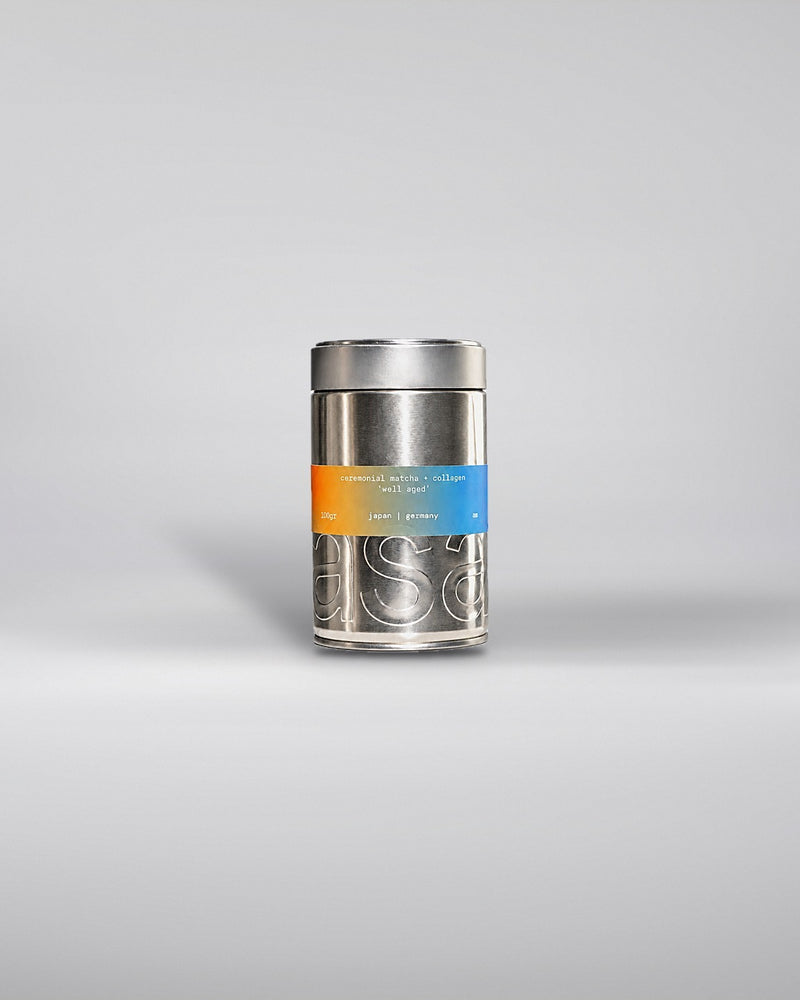
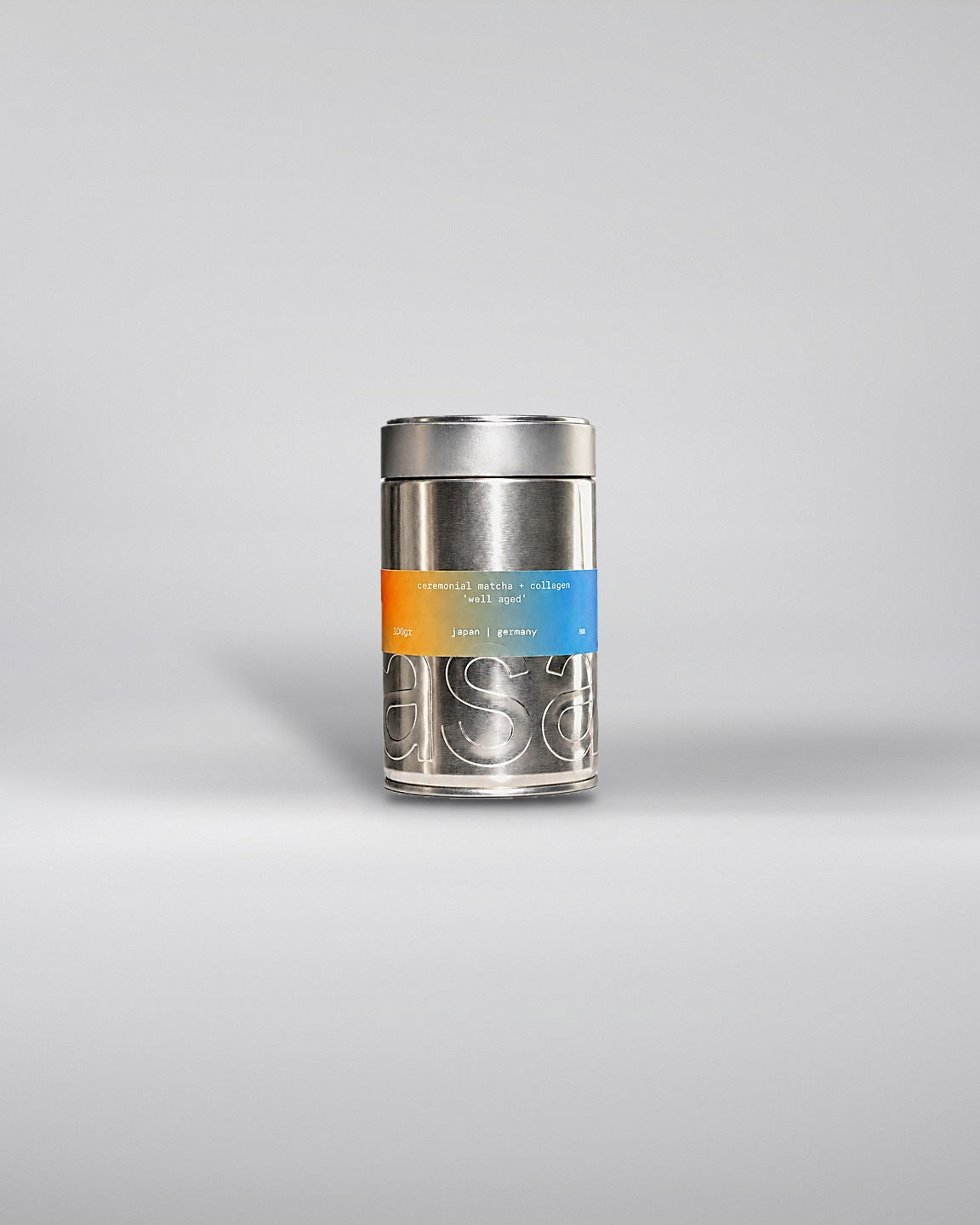
Collagen that tastes of something usually needs sugar or flavouring to hide it. verisol® is tasteless and dissolves easily, so we don't need to hide anything. In our ceremonial matcha + verisol® collagen peptides there's no added sugar and no sweeteners. You taste smooth ceremonial matcha, and that's it.
Frequently asked questions
Is marine collagen better than bovine collagen?
Not by definition. The source is a choice, not a quality mark. What matters is which peptide you're getting and whether that ingredient has been studied for skin.
How do I know if a collagen product works?
Look for a named ingredient with its own studies, and check that the amount per serving is close to the amount used in those studies.
Why does some collagen taste strange?
Collagen can have a taste of its own. Many products cover it with sugar, sweeteners or flavourings. A good collagen peptide is tasteless, so there's nothing to cover.